
DSD/CLP/GHS

DSD - Dangerous Substances Directive 67/548/EEC

CLP - Classification, labelling & packaging

GHS - Global Harmonised System
CLP is the Regulation on classification, labelling and packaging of substances and mixtures. This Regulation aligns previous EU legislation on classification, labelling and packaging of chemicals to the GHS (Globally Harmonised System of Classification and Labelling of Chemicals). Its main objectives are to facilitate international trade in chemicals and to maintain the existing level of protection of human health and environment. The GHS is a United Nations system to identify hazardous chemicals and to inform users about these hazards through standard symbols and phrases on the packaging labels and through safety data sheets (SDS).
The CLP Regulation was published in the Official Journal 31 December 2008 and entered into force on 20 January 2009. According to the Regulation, the deadline for substance classification according to the new rules will be 1 December 2010. For mixtures, the deadline will be 1 June 2015. The CLP Regulation will ultimately replace the current rules on classification, labelling and packaging of substances (Directive 67/548/EEC) and preparations (Directive 1999/45/EC) after this transitional period.
You can find an example as follows
Formaldehyde (CH2O)
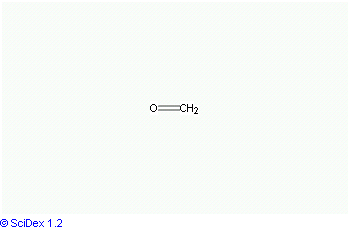
Formula: CH2O
Molecular Weight: 30.026 g/mol
Name: formaldehyde
CAS-RN: 50-00-0
EG-Index: 605-001-00-5 (96/54/EC)
EINECS: 200-001-8 (EINECS)
Hazard Information (Dangerous Substances Directive 67/548/EEC)
Hazard symbol
T Toxic
96/54/EC
R-Phrase
23/24/25-34-40-43
R23/24/25 Toxic by inhalation, in contact with skin and if swallowed.
R34 Causes burns.
R40 Possible risks of irreversible effects.
R43 May cause sensitization by skin contact.
S-Phrase
(1/2-)26-36/37/39-45-51
S1/2 Keep locked up and out of the reach of children.
S26 In case of contact with eyes, rinse immediately with plenty of water and seek medical advice.
S36/37/39 Wear suitable protective clothing, gloves and eye/face protection.
S45 In case of accident or if you feel unwell, seek medical advice immediately (show the label where possible).
S51 Use only in well-ventilated areas.
Signal Word
Danger
EC/1272/2008
Pictogram


Hazard Statements
H351 : Suspected of causing cancer .
H331 : Toxic if inhaled.
H311 : Toxic in contact with skin.
H301 : Toxic if swallowed.
H314 : Causes severe skin burns and eye damage.
H317 : May cause an allergic skin reaction.
P201 : Obtain special instructions before use.
P202 : Do not handle until all safety precautions have been read and understood.
P260 : Do not breathe dust/fume/gas/mist/vapours/spray.
P261 : Avoid breathing dust/fume/gas/mist/vapours/spray.
P264 : Wash ... thoroughly after handling.
P270 : Do no eat, drink or smoke when using this product.
P271 : Use only outdoors or in a well-ventilated area.
P272 : Contaminated work clothing should not be allowed out of the workplace.
P280 : Wear protective gloves/protective clothing/eye protection/face protection.
P281 : Use personal protective equipment as required.
P301 + P310 : IF SWALLOWED: Immediately call a POISON CENTER or doctor/physician.
P301 + P330 + P331 : IF SWALLOWED: rinse mouth. Do NOT induce vomiting.
P302 + P352 : IF ON SKIN: Wash with plenty of soap and water.
P303 + P361 + P353 : IF ON SKIN (or hair): Remove/Take off immediately all contaminated clothing. Rinse skin with water/shower.
Precautionary Statements
P304 + P340 : IF INHALED: Remove victim to fresh air and keep at rest in a position comfortable for breathing.
P305 + P351 + P338 : IF IN EYES: Rinse cautiously with water for several minutes. Remove contact lenses, if present and easy to do. Continue rinsing.
P308 + P313 : IF exposed or concerned: Get medical advice/attention.
P310 : Immediately call a POISON CENTER or doctor/physician.
P311 : Call a POISON CENTER or doctor/physician.
P312 : Call a POISON CENTER or doctor/physician if you feel unwell.
P321 : Specific treatment (see ... on this label).
P322 : Specific measures (see ... on this label).
P330 : Rinse mouth.
P333 + P313 : If skin irritation or rash occurs: Get medical advice/attention.
P361 : Remove/Take off immediately all contaminated clothing.
P363 : Wash contaminated clothing before reuse.
P403 + P233 : Store in a well-ventilated place. Keep container tightly closed.
P405 : Store locked up.
P501 : Dispose of contents/container to ...
Classification
Carc. 2
Acute Tox. 3 *
Acute Tox. 3 *
Acute Tox. 3 *
Skin Corr. 1B
Skin Sens. 1
EC-Reference
605-001-00-5
Technical Support
- Changes in Safety Data Sheets
- New SDS Regulation
- Safety Data Sheet Using
- Development of MSDS
- Risk Phrases
- Safety Phrases
- Risk Notes
- DSD / DPD Symbols
- GHS Codification
- CLP / GHS
- SVHC Candidate List
- ADR 2011
- Databases & Download
- What is GHS?
- Useful Links
- Glossary
- Hazard & Precautionary Statements
- SEVESO II